
I was hurt in an Uber or Lyft crash in Fort Myers. Which insurance covers me?
It comes down to what the driver was doing in the app when the crash happened. Florida's transportation network company law (Fla. Stat. § 627.748) requires $1,000,000 in liability coverage from the time a driver accepts a trip until the rider steps out; when the driver is logged in and still waiting for a request, the required limits shrink to $50,000 for each injured person and $100,000 for the whole crash; and with the app turned off, the driver's own auto policy is the only one in play.
From the Fort Myers office at 3049 Cleveland Avenue, Wolfson & Leon represents rideshare passengers, people in the other vehicle, pedestrians and cyclists, and Uber and Lyft drivers injured anywhere in Lee County. The first conversation is free, it can be in Spanish or English, and the firm is paid only if it collects compensation for you.
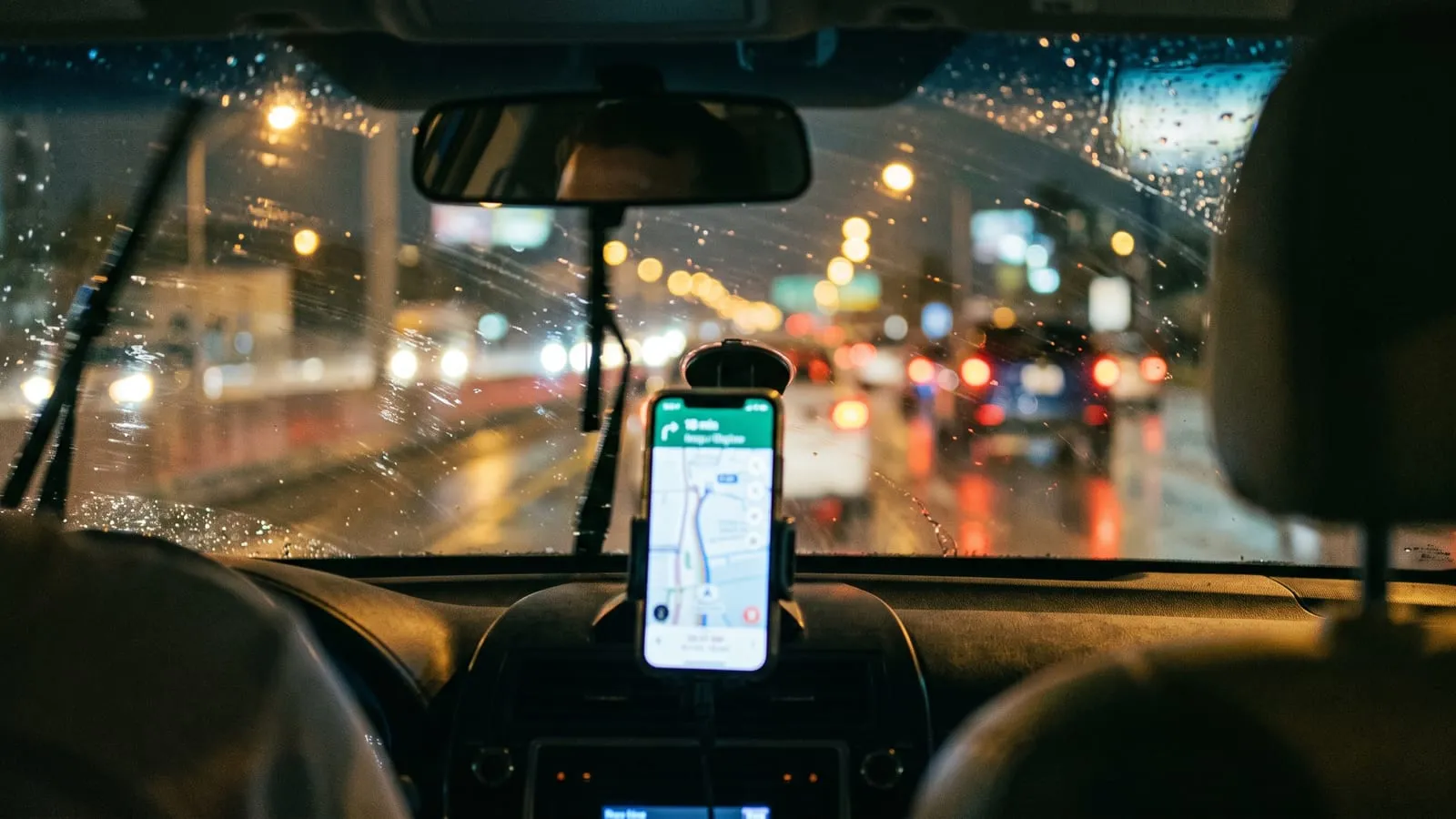
How does Florida split rideshare coverage into periods?
Fla. Stat. § 627.748(7) ties the required insurance to what the driver is doing in the app. Think of it as three stages:
- Logged out. The person is simply a private motorist, so only a personal policy applies, and many personal policies exclude driving for hire. Coverage at this stage can be small or contested.
- Logged in, no trip accepted yet. The company, the driver, or the two combined must keep bodily injury limits of no less than $50,000 for each injured person and $100,000 for the whole crash, with another $25,000 for damaged property.
- Trip accepted, through drop-off. The company has to supply a $1,000,000 liability policy, together with PIP and uninsured motorist coverage.
Where do rideshare crashes happen in Lee County?
Wherever the rides are. Southwest Florida International Airport (RSW) sends a constant flow of trips up Daniels Parkway and Treeline Avenue toward I-75, often with a driver glancing at the app while a tired traveler tries to give directions. Weekend nights bring pickups and drop-offs along First Street and the restaurants and bars of the downtown River District, and on Estero Boulevard around Times Square on Fort Myers Beach, where people on foot and cars share a tight, busy road.
In late winter, spring training at JetBlue Park and Hammond Stadium draws crowds to Daniels Parkway and Six Mile Cypress Parkway, while the season fills US 41, Summerlin Road, and the Sanibel Causeway with visitors who did not bring a car. Events at Hertz Arena and evenings at Gulf Coast Town Center add more. Knowing exactly where and when your trip happened helps us track down cameras and witnesses quickly.
I was the passenger. Do I need to prove who caused the crash?
Not in the way most people worry about. A passenger was not driving, so fault almost never lands on you; the real question is which driver caused it, the rideshare driver, another motorist, or both. Because the trip was active, the $1,000,000 policy stands behind the rideshare driver's share of the blame, and the company's uninsured motorist coverage can step in when the other driver is responsible and carries too little insurance.
Medical bills start with PIP. Car owners turn to their own PIP first. Riders without a car, which is common among people who rely on Uber and Lyft to get around, are covered by the rideshare vehicle's PIP instead (Fla. Stat. § 627.736(4)(e)).
I drive for Uber or Lyft and another car hit me. What now?
You can pursue the at-fault driver, and if you were on a trip, the company's uninsured motorist coverage may also be available. Be careful with your own insurer, though. A personal auto policy without a rideshare endorsement may refuse to pay, or the carrier may even cancel it, once it learns you were driving for an app. We go through the trip records and every policy that might apply before you speak with any adjuster.
What evidence decides a rideshare claim?
The trip record comes first. Uber and Lyft log, second by second, when the driver went online, accepted a request, reached the pickup, and ended the ride, and that timeline settles which coverage period applies. The same day, screenshot your receipt, the route map, and the driver's name and plate.
The companies keep that data but will not simply give it to you when you ask; a lawyer has to request it formally. We also obtain the crash report from the Fort Myers Police Department, Cape Coral Police, the Lee County Sheriff's Office, or the Florida Highway Patrol, and look for airport, business, and doorbell video near the scene.
What compensation is available after a rideshare crash in Lee County?
Riders, other motorists, pedestrians, and app drivers can recover medical expenses, lost income, and pain and suffering when the injury is permanent. Where that money comes from depends on the driver's status when the crash happened: the $1,000,000 rideshare policy during an accepted trip, the smaller rideshare limits while the driver was waiting for a request, or the driver's personal coverage with the app off (Fla. Stat. § 627.748). PIP covers medical bills first. If someone other than the rideshare driver caused the crash, that person's bodily injury coverage and the company's uninsured motorist coverage come into play. Since the trip data controls which layer applies, we ask for it formally in every case we take.
Which mistakes can hurt an Uber or Lyft claim?
- Losing the trip details. Screenshot the receipt, the route, and the driver profile on the day of the crash; together they show you were on a ride.
- Giving the company's claims administrator a full account. Confirm the trip happened and stop there until you have a lawyer.
- Drivers: calling your personal insurer before checking its rideshare exclusion. That call can lead to a denial or a canceled policy.
- Skipping the police report or the in-app report because the driver asked you to keep things off the record.
- Believing the company "will handle it." Uber and Lyft meet their obligations through insurers, and those insurers review claims like any other.
- Flying home without seeing a doctor. Visitors leaving through RSW often put off care, and a gap in treatment gets used against the claim.
Key facts
- $1,000,000 in liability coverage is required from the moment a ride is accepted until the passenger exits the vehicle. Source: Fla. Stat. § 627.748(7)(c)
- Logged in with no accepted ride: bodily injury minimums of $50,000 for each injured person and $100,000 for the whole crash, and $25,000 for damaged property. Source: Fla. Stat. § 627.748(7)(b)
- While a trip is underway, the company's coverage must also include PIP and uninsured/underinsured motorist protection. Source: Fla. Stat. § 627.748(7)(c)
- A rider who owns no car receives PIP benefits from the vehicle they were riding in. Source: Fla. Stat. § 627.736(4)(e)
- Crashes from March 24, 2023 onward: in most cases, two years to file a negligence suit. Source: Fla. Stat. § 95.11
- An injured person found more than 50% at fault recovers no damages. Source: Fla. Stat. § 768.81(6)
Frequently asked questions
Uber messaged me asking what happened. Do I have to reply?
You can confirm that the ride took place, but hold off on details until you have spoken with a lawyer. Uber and Lyft pass claims to outside administrators, and whatever you write or say can be used to shrink the claim. Let your attorney handle the rest of that conversation.
Can I sue Uber or Lyft itself?
Usually the claim runs against the insurance the company is required to carry rather than against the company directly, because Florida treats rideshare drivers as independent contractors. In most cases the $1,000,000 policy is where payment comes from. We review the facts of your crash to see whether a direct claim also exists.
I was on foot or on a bike when a rideshare driver struck me. Am I covered?
If the driver had accepted a trip or had a passenger aboard, the $1,000,000 coverage protects pedestrians and cyclists too. With the app on and no trip, the lower limits apply, and with the app off, only the driver's own policy does. Busy pickup areas downtown and along Estero Boulevard make this a frequent question.
How do I prove which period the driver was in?
Through the trip and login data the company keeps. Your receipt shows part of the picture. We send a formal request for the complete records as soon as we are hired.
I was visiting from out of state when my Uber crashed. Can I still bring a claim here?
Yes. A crash on Lee County roads is generally decided under Florida law no matter where you live, and the rideshare coverage follows the trip, not your home address. We can work with you by phone and video once you are back home, so the claim can keep moving without you returning to Florida for every step.
What happens when you call
A real person picks up
Call 239-309-1392 at any hour. Someone from the firm answers, in Spanish if you like. Late at night, we take your information and an attorney calls you early the next morning.
About 15 minutes on what happened
We ask when and where it happened, what medical care you have had, whether police wrote a report, and whether an insurer has contacted you. You do not need any documents handy.
An honest answer
If yours is a case we can take, we explain what comes next and what to avoid in the meantime. If it is not, we tell you plainly and point you to who else might help.
Nothing up front if you hire us
We take a percentage of any money recovered, and that is put in writing before you sign. No recovery, no fee. If getting to the office is hard, we will come to where you are, whether that is home or a hospital bed.
We have not written about this topic yet. Give us a call and an attorney will answer your question.