
Hurt in a fall at a building still being repaired after Hurricane Ian: who is responsible in Lee County?
When you fall at a Lee County property that is damaged or under repair after Hurricane Ian or a later storm, responsibility usually belongs to whoever controlled the spot where you fell: the owner or property manager, the contractor doing the work, or both. If the fall happened inside a store on something wet or slippery, such as water from a leaking repaired roof, the business is liable only if it knew of the hazard or, with ordinary care, would have discovered it (Fla. Stat. § 768.0755). A condominium association must maintain the common elements (Fla. Stat. § 718.113(1)), and an apartment landlord must keep common areas clean and safe (Fla. Stat. § 83.51(2)(a)).
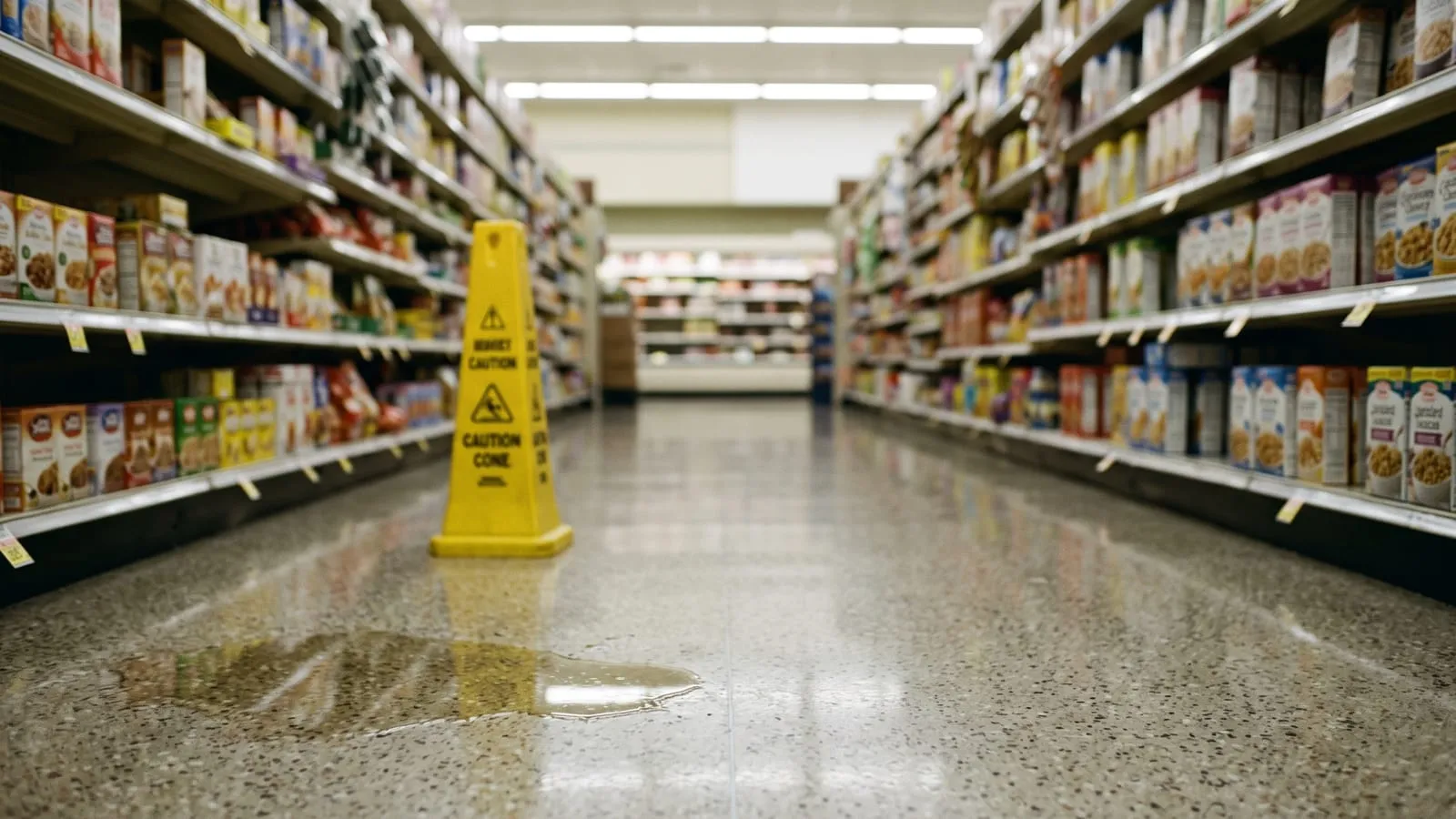
Hurricane Ian came ashore near Cayo Costa on September 28, 2022, and Lee County has been rebuilding since. On Fort Myers Beach, Sanibel, Pine Island and along the river, and in neighborhoods all over Cape Coral and Fort Myers, buildings are still being repaired, rebuilt or waiting their turn, and later storms have added to the list. That means scaffolding over storefront entrances, temporary wooden stairs at raised homes, blue tarps on roofs that leak onto floors, patched concrete walkways, and contractors’ tools and debris in places the public still walks. People fall in these places every week. The legal question is who answers for it.
What storm-repair hazards cause falls?
The same handful, over and over:
- Temporary stairs and ramps without handrails, with uneven risers, or built from plywood that turns slick in the rain.
- Water inside buildings from roofs, windows and ceilings that were patched rather than replaced.
- Uneven or patched flooring: missing tile, a raised threshold, a seam between old and new concrete.
- Construction debris: nails, cut drywall, loose screws, cords and hoses across walkways.
- Scaffolding and barricades that narrow a sidewalk or push foot traffic into a parking lot.
- Damaged docks, seawalls and boardwalks at condos, marinas and waterfront restaurants.
- Poor lighting where fixtures were removed and not yet replaced.
Is the property owner or the contractor responsible?
Florida premises law generally puts the duty on whoever controlled the area where you fell. On a repair site, that can be more than one company:
- The owner or property manager still owes visitors a reasonably safe place and a warning about dangers it knows of and you would not see. When a store, restaurant or hotel stays open during repairs and invites the public in, it keeps that responsibility for the parts it leaves open.
- The general contractor that took over an area, fenced it, set up stairs or ramps, or controlled the work schedule can be responsible for hazards it created there.
- A subcontractor whose crew left the cord, the debris or the open hole can be responsible for that specific condition.
Often the owner and the contractor both had a role. The building permit filed with Lee County or the city lists the contractor on the job; the contract between owner and contractor usually spells out who was supposed to keep the site safe; and photos and video of the site on the day you fell show who was actually doing it. We gather all three, and claims are usually made against every party that may share the fault.
What if I fell inside a store that was open during repairs?
Then a specific statute applies. Rainwater dripping through a patched roof, a puddle under a leaking window, grit tracked in from work next door: each is a “transitory foreign substance” under Fla. Stat. § 768.0755. For a fall on one inside a business, you carry the burden under that statute: the business must have known about the condition, actually or constructively, and failed to deal with it. Constructive knowledge is usually proven indirectly, by showing the substance sat there long enough to be found with ordinary care, or that the problem kept recurring and was foreseeable.
Storm-damaged buildings often make that second point easier than usual. A roof that leaks every time it rains, buckets set out on rainy days, staff who mop the same spot each afternoon: each of those shows a condition that happened with regularity. The store’s own camera footage, maintenance tickets and repair invoices are the proof, and they need to be preserved quickly.
What about a condominium or an HOA community?
Many falls since Ian have happened in condominium buildings on the beach and the river, where repairs to walkways, stairwells, pools and garages have stretched on for years. Under Fla. Stat. § 718.113(1), a condominium association is responsible for maintaining the common elements, which normally include those areas. The association also usually hired the contractor, so both may be involved. For homeowners’ associations, the duty to maintain common areas comes from the community’s governing documents and ordinary premises law. Either way, the association’s insurance, not the individual board members, is normally what responds to the claim.
What if I rent, or was staying in a vacation rental?
In an apartment building, the landlord must make reasonable provisions for the clean and safe condition of common areas (Fla. Stat. § 83.51(2)(a)), which covers hallways, stairs and walkways damaged by the storm. Inside a single-family rental, the answer depends on the lease and on whether the landlord knew of the hazard. If you were a guest at a vacation rental on Fort Myers Beach or Sanibel, the owner and any management company owed you reasonable care for the condition of the property, including damage that was patched over before your stay.
What about damaged public sidewalks, parks and beach accesses?
Falls on property owned by the City of Fort Myers, the City of Cape Coral or Lee County are claims against the government. Under Fla. Stat. § 768.28(6), the claim has to be presented to the agency in writing first, followed by a waiting period before any lawsuit, and damages against government entities are capped by statute. If a private contractor working for the city left the hazard, the contractor may be responsible too.
Does a warning sign or caution tape end the case?
No, but it matters. A warning protects the owner only if it actually warned of the danger that hurt you and was placed where you would see it. Caution tape across one doorway does not excuse a missing handrail on the stairs everyone was sent to use instead. How careful you were is also part of the case. Florida’s comparative fault statute, § 768.81(6), lets a jury put a percentage of the blame on you; your award drops by that percentage, and it disappears only if your percentage tops 50%.
What should I do after a fall at a repair site?
- Report it to the manager, the association or the job-site supervisor, and get the name of the person you told.
- Photograph the hazard right away: the stairs, the water, the debris, the lighting, any signs or the lack of them, and the contractor trucks or job-site trailers on the property.
- Write down the names of the companies working there, and of any witnesses.
- Get medical care the same day and describe the fall step by step: what you stepped on, what gave way, how you landed.
- Set aside the shoes and clothes you had on, unwashed.
- Call a lawyer quickly. Repair sites change daily. The temporary stairs that caused your fall may be torn out next week, and store video is commonly recorded over in weeks.
How Wolfson & Leon handles falls at storm-damaged properties
We start with the question that decides these cases: who controlled the spot where you fell. Then we pull the permit records, request the owner-contractor contract, send preservation letters for video, incident reports, maintenance tickets and repair records, and photograph the site before it changes. Past results from this office include a $2,200,000 premises liability recovery, and prior results do not guarantee a similar outcome in your case. For falls since March 24, 2023, the deadline to file suit is two years (Fla. Stat. § 95.11). Call our Fort Myers office at 239-309-1392. Talking with us costs nothing, we work in English and Spanish, and our fee comes only out of money we recover for you. Read more about our slip and fall practice.
Key facts
- A shopper who slips on something temporary on a business's floor carries the burden of showing the business was aware of it, actually or constructively. Source: Fla. Stat. § 768.0755
- Constructive knowledge can be proven by how long the condition was there or by how regularly it happened. Source: Fla. Stat. § 768.0755(1)(a)–(b)
- Condominium associations carry the duty to maintain common elements; apartment landlords must keep common areas clean and safe. Source: Fla. Stat. § 718.113(1); Fla. Stat. § 83.51(2)(a)
- A claim for a fall on city or county property needs written notice to the government before suit. Source: Fla. Stat. § 768.28(6)
- Shared fault reduces damages and bars them when the injured person is more than half at fault. Source: Fla. Stat. § 768.81(6)
- Falls since March 24, 2023 carry a two-year deadline to file a negligence suit. Source: Fla. Stat. § 95.11
Frequently asked questions
The owner says the contractor is responsible, and the contractor blames the owner. What happens?
That is common, and you do not have to sort it out yourself. A claim can be made against both, and their insurers then argue between themselves over who controlled the area. The building permit, the contract and the jobsite photos usually show which company was in charge of that spot.
I tripped over storm debris on a public sidewalk in Fort Myers. Can I make a claim?
Possibly, against the city or county if it knew about the hazard and left it there, or against a private owner or contractor who left the debris. Before suing the City of Fort Myers, the City of Cape Coral or Lee County, the claim has to be presented in writing as Fla. Stat. § 768.28(6) requires.
There was caution tape up. Does that mean I have no case?
Not automatically. The question is whether the tape told you about the hazard that actually injured you, and whether you could see it. A warning on one part of a site says nothing about an unrelated danger elsewhere. How careful you were is weighed separately, as a percentage of fault.
I was hurt while working on one of these repairs. Is this the same kind of claim?
Not quite. Against your own employer, workers' compensation is usually the only remedy (Fla. Stat. § 440.11). But a different company on the site, such as another subcontractor or the property owner, may still be responsible in a separate claim.
Wolfson & Leon publishes this article as general information about Florida injury law. It is not legal advice for your situation, and reading it or contacting us through this page does not form an attorney-client relationship. Each claim turns on its own facts, and prior results do not guarantee a similar outcome in any other matter. If you were injured, speak with a lawyer about your own case.
Also available in: Versión en español