
Boating accident in Lee County: who is liable on the Caloosahatchee, Pine Island Sound or a Cape Coral canal?
In a Lee County boating accident, the operator who ran the boat carelessly is the first party responsible (Fla. Stat. § 327.33), and the boat's owner can also be liable for letting someone else operate it under Florida's dangerous instrumentality doctrine (Fla. Stat. § 327.32). A rental business can share fault if it skipped the safety instruction Florida requires of boat liveries (Fla. Stat. § 327.54). Any accident that causes an injury needing more than first aid must be reported to the FWC or local law enforcement (Fla. Stat. § 327.30), and because the Caloosahatchee, Pine Island Sound and Estero Bay are navigable waters, federal maritime law may also apply and change the deadline.
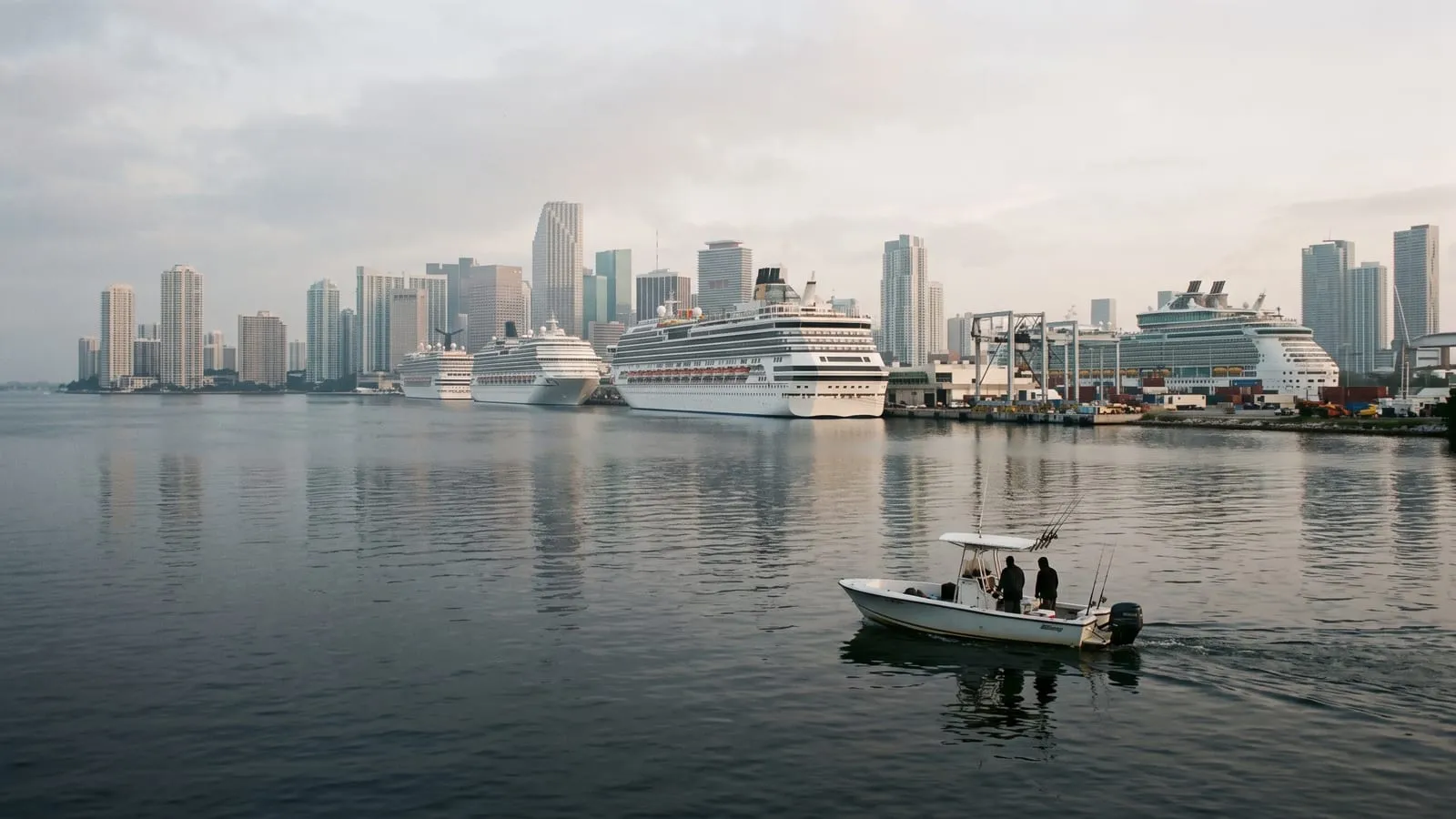
Lee County has more ways to be on the water than most places in Florida: the Caloosahatchee River running past downtown Fort Myers to San Carlos Bay, Pine Island Sound and Matlacha Pass behind the barrier islands, Estero Bay south of Fort Myers Beach, the open Gulf, and Cape Coral’s canal system, which runs for hundreds of miles behind private homes. Boating accidents here look different from one another. A wake throws a passenger against a console in a canal. Two center consoles meet at a blind bend in Matlacha Pass. A rented pontoon runs aground on a sandbar near Fort Myers Beach. A fishing charter’s deckhand is hurt by a line. Each one raises the same question: who is legally responsible?
Who can be held responsible for a boating accident?
More than one party, often. The usual list:
- The operator. The person at the helm must run the boat in a careful and prudent way that does not endanger people or property. Speeding in a no-wake zone, running a channel at night without lights, operating impaired, ignoring right-of-way rules or not keeping a lookout are all violations that support a negligence claim (Fla. Stat. § 327.33).
- The owner. Florida treats a boat much like a car for this purpose. An owner who allows someone else to run the boat can answer for that operator’s careless driving, even if the owner stayed home (Fla. Stat. § 327.32 and Florida common law).
- A rental livery. Businesses that rent pontoons, jet skis and small boats on Fort Myers Beach, in Cape Coral and on the islands must follow Florida’s livery rules, including giving each renter safety instruction before the rental (Fla. Stat. § 327.54). A livery that hands keys to an untrained renter, or rents a boat with a known mechanical problem, can share fault.
- A charter, tour or fishing guide. Commercial operators carrying paying passengers owe those passengers reasonable care, and their crews’ conduct is the company’s responsibility.
- A marina or dock owner. Rotten planks, missing cleats, unlit fuel docks and poorly secured gangways are premises problems on the water.
- A manufacturer. A throttle that sticks, a steering cable that fails or a fuel system that leaks can make a product claim part of the case.
Does it matter that the operator never took a boating course?
It can. If you were born January 1, 1988 or later, Florida says you must pass an approved boater-safety course and carry the boater education ID card before operating a motorboat of 10 horsepower or more (Fla. Stat. § 327.395). Rental customers can qualify through a temporary certificate, and liveries are expected to check. A missing card does not by itself prove the operator caused the crash, but it tells a jury something about the operator’s experience, and about the livery or owner who handed over the controls anyway.
Who investigates a boating accident in Lee County, and what must be reported?
Reportable boating accidents are investigated by the FWC, Florida’s Fish and Wildlife Conservation Commission. The Lee County Sheriff’s Office, local police marine units and the U.S. Coast Guard may respond too, depending on where it happened and what kind of vessel was involved.
Under Fla. Stat. § 327.30, the operator must report an accident without delay whenever someone dies or disappears, someone is hurt badly enough to need care beyond first aid, or the damage reaches $2,000. The operator also has to stop, give reasonable help to anyone hurt, and identify himself or herself. Fleeing after an accident that injured or killed someone is a crime.
Before you leave the dock or the boat ramp, get a case number and the name of the investigating agency. The FWC’s investigation, with its diagrams, measurements and statements, is often the most important document in the claim.
Who pays for my injuries after a boating accident?
This is where boating claims differ most from car crashes. PIP does not apply on the water, and no Florida law makes a recreational boat owner buy liability insurance. So the first job is finding coverage:
- the owner’s boat (marine) policy, if there is one;
- the owner’s homeowners or umbrella policy, which sometimes covers smaller boats;
- the livery’s or charter company’s commercial policy;
- your own health insurance, for treatment in the meantime.
Lee Memorial, HealthPark and Cape Coral Hospital all treat boating injuries. Whatever coverage is found later, get seen and keep the records.
Does Florida law or federal maritime law apply?
Possibly both. The Caloosahatchee, the sounds, the bays and much of the canal network are navigable waters, and an accident there can fall within federal admiralty jurisdiction (28 U.S.C. § 1333). That choice matters in three practical ways:
| Question | Florida law | Federal maritime law |
|---|---|---|
| Deadline to sue | Two years for injuries since March 24, 2023 (Fla. Stat. § 95.11) | Generally three years (46 U.S.C. § 30106) |
| Shared fault | No recovery for a person more than half at fault (Fla. Stat. § 768.81(6)) | Different rules may apply |
| Owner’s limitation of liability | Not available | An owner may ask a federal court to cap liability at the boat’s value |
That last row surprises people. A federal statute from 1851, the Limitation of Liability Act, now at 46 U.S.C. § 30501 and following, lets a boat owner ask a federal court to limit liability to what the vessel is worth after the accident. That petition has to be filed no later than six months after the owner gets a written claim (46 U.S.C. § 30529). A written claim letter sent early starts that clock and forces the issue into the open.
Do not plan around the longer three-year window. Which law applies is a question a court decides, and guessing wrong can cost the whole claim.
What should I do after a boating accident on Lee County waters?
- Get medical help and call 911 or hail the FWC or Coast Guard on the radio. Note the time.
- Mark the location. Save a GPS pin on your phone or the boat’s chartplotter. “Near the Cape Coral Bridge” is not precise enough later.
- Photograph the boats, including the registration numbers on each bow, the damage, the water and weather conditions, and any channel markers or no-wake signs nearby.
- Get names and numbers of the other operator, the owner, passengers and anyone on nearby boats or docks.
- For a rental, photograph the rental agreement, the waiver and any safety checklist, and note whether anyone checked your boater education card.
- Do not sign anything new after the accident for a livery, charter or insurer until a lawyer has read it.
How Wolfson & Leon handles Lee County boating claims
We start by finding out where the boat was, who owned it, who was driving and what insurance exists, because on the water there is no automatic PIP to fall back on. Then we request the FWC report, send preservation letters to the livery or charter company for maintenance logs, rental files and any onboard or dock camera footage, and send the written notice that starts the federal limitation clock. Call our Fort Myers office at 239-309-1392. Talking with us costs nothing, we work in English and Spanish, and our fee comes only out of money we recover for you. Read more on our cruise and boating accidents page.
Key facts
- Operating a vessel carelessly, without regard for other people and property on the water, violates Florida law and supports a negligence claim. Source: Fla. Stat. § 327.33
- An owner who lets someone else operate the boat can be held responsible for that person's negligence even when the owner was not aboard. Source: Fla. Stat. § 327.32; Florida common law
- Boat rental liveries must meet Florida safety requirements, including giving renters safety instruction before they leave the dock. Source: Fla. Stat. § 327.54
- A person born January 1, 1988 or later must pass an approved boater-safety course to operate a motorboat of 10 horsepower or more. Source: Fla. Stat. § 327.395
- A death, a missing person, an injury that needs more than first aid, or $2,000 or more in damage makes the accident reportable. Source: Fla. Stat. § 327.30
- Florida law allows two years to sue for injuries since March 24, 2023; general maritime law usually allows three. Source: Fla. Stat. § 95.11 (Florida); 46 U.S.C. § 30106 (maritime)
Frequently asked questions
I was a guest on a friend's boat. Do I really have to make a claim against my friend?
The claim is against your friend's insurance, not your friend's bank account, in most cases. Boat policies and some homeowners or umbrella policies exist for exactly this situation. Your friend's insurer, not your friend, pays and defends the claim.
Does PIP pay for injuries in a boating accident?
No. PIP is motor vehicle coverage and does not apply on the water. Your health insurance, the boat owner's marine or homeowners policy, an umbrella policy, or a rental company's coverage are the usual sources, and they should be identified early.
I signed a waiver when I rented the jet ski on Fort Myers Beach. Is my claim over?
Not necessarily. Paperwork signed at the dock does not always excuse a rental company's own carelessness, for example handing over a machine with a known defect or skipping the safety briefing Florida requires. Keep a copy of what you signed and let a lawyer read it.
The other boat left without stopping. What now?
Report it to the FWC or the Lee County Sheriff's Office right away with everything you remember: hull color, size, motor type, registration numbers, direction and time. A boater who flees after injuring someone commits a crime in Florida, and marinas and waterfront homes along the canals and river often have cameras.
Wolfson & Leon publishes this article as general information about Florida injury law. It is not legal advice for your situation, and reading it or contacting us through this page does not form an attorney-client relationship. Each claim turns on its own facts, and prior results do not guarantee a similar outcome in any other matter. If you were injured, speak with a lawyer about your own case.
Also available in: Versión en español